


Recommended combination

Product description
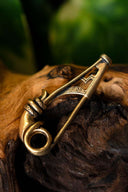
The Birdlip brooch takes its name from the distinctive curled decoration at the back of the brooch. This type is a typical example of insular fibulae from the La Tène III period (150 BC to the birth of Christ). The original Birdlip brooch, crafted entirely from gold, was discovered near Market Rasen in Lincolnshire, England, and dates from 75 to 25 BC, a time marking the first contact with the Roman Empire. The replica of this brooch is available in high-quality bronze. The dimensions of the replica brooch are 4.2 x 1.8 x 0.8 cm.
The design of the Birdlip brooch is based on continental brooch types, such as the trumpet brooch, and represents a local adaptation in Britain during the late La Tène period. The brooch features a small trumpet-shaped head, with a protruding tongue or beak above it. This design was short-lived and is found mainly along the south-east coast of Britain, suggesting possible Gallic influence.
In the Celtic and Roman worlds, brooches (fibulae) were essential for fastening garments. Various shapes and styles of brooches developed, all following the basic principle of the safety pin. Whilst most Celtic fibulae were crafted from bronze or iron, gold was also employed, particularly for those worn by individuals of higher status, signifying wealth and power.
Product details
Product details:
Material: bronze
Dimensions: 4.2 x 1.8 x 0.8 cm
Based on a historic original
Shipment weight (grams): 100


